
The Architectural Heritage of Uzbekistan’s Silk Road Cities
For centuries, the ancient trade routes of the Silk Road connected East and West through commerce, diplomacy, religion, and cultural exchange. Along these routes, the cities of modern-day Uzbekistan emerged as some of the most influential urban centers in Central Asia. Today, cities such as Samarkand, Bukhara, and Khiva remain powerful symbols of the country’s historical identity and architectural legacy.
The architectural heritage of Uzbekistan’s Silk Road cities reflects centuries of interaction between Persian, Turkic, Islamic, and Mongol civilizations. Majestic madrasas, intricate mosaics, towering minarets, and vast public squares reveal how architecture became both a practical and symbolic expression of political power, religious devotion, and cultural sophistication. In modern Uzbekistan, these historic cities continue to shape national identity while also serving as important centers of tourism, heritage preservation, and international cultural recognition.
The Silk Road and the Rise of Central Asian Cities
The Silk Road was not a single road but an interconnected network of trade routes stretching from China to the Mediterranean. Uzbekistan occupied a strategic position along these routes, making its cities vital centers for merchants, scholars, travelers, and empires.
As caravans moved across deserts and steppes, cities in Central Asia developed into hubs of economic and intellectual activity. Trade in silk, spices, ceramics, precious metals, and textiles generated wealth that allowed rulers to invest heavily in architecture and urban development. Over time, these cities became renowned not only for commerce but also for science, education, and Islamic scholarship.
The architectural landscape that emerged from this period reflected cultural diversity and global exchange. Influences from Persian aesthetics, Islamic geometric design, Turkic craftsmanship, and Timurid artistic ambition blended into a distinctive architectural tradition that continues to define Uzbekistan today.
Samarkand: The Jewel of the Silk Road
Among Uzbekistan’s historic cities, Samarkand is perhaps the most internationally recognized. Often referred to as the “Jewel of the Silk Road,” Samarkand flourished under the rule of Timur, also known as Tamerlane, during the 14th century.
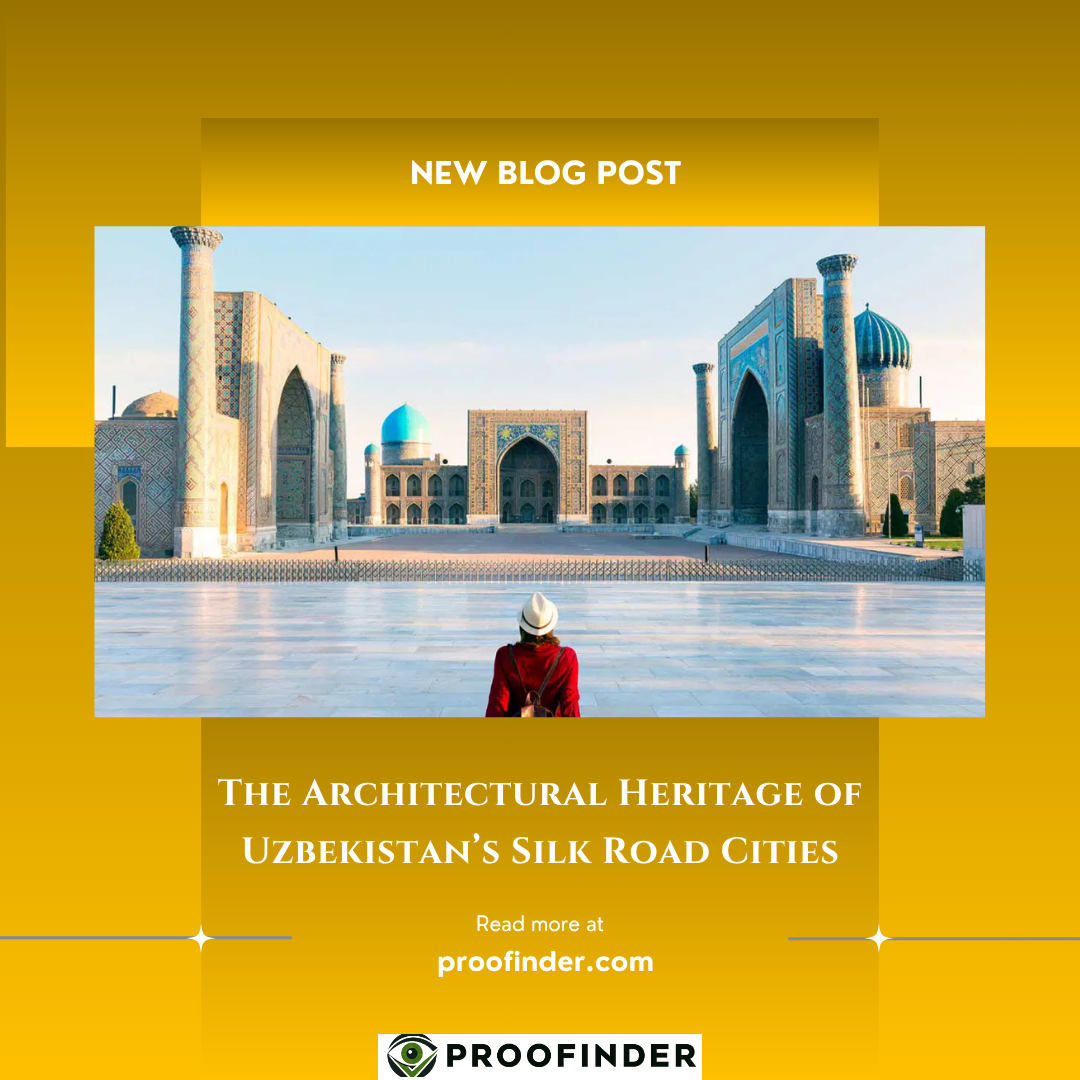
Timur envisioned Samarkand as the cultural and political center of his empire. As a result, the city experienced a remarkable architectural transformation marked by monumental construction projects and artistic innovation. One of the most iconic sites in Samarkand is Registan Square, a grand public space surrounded by three monumental madrasas decorated with elaborate tilework, geometric patterns, and Arabic calligraphy.
The city’s architecture demonstrates the importance of Islamic art and urban planning during the Timurid era. Blue domes, symmetrical facades, and detailed mosaics became defining characteristics of Samarkand’s visual identity. Structures such as the Bibi-Khanym Mosque and the Gur-e-Amir Mausoleum further illustrate the ambition and craftsmanship of the period.
Beyond aesthetics, Samarkand’s architecture symbolized imperial authority and intellectual prestige. Scholars, astronomers, and theologians from different parts of the Islamic world gathered in the city, contributing to its reputation as a center of knowledge and cultural exchange.
Today, Samarkand represents both historical continuity and national pride in Uzbekistan. Its preserved monuments attract global visitors while reinforcing the country’s connection to its Silk Road heritage.
Bukhara: A Living Museum of Islamic Civilization
While Samarkand became known for monumental imperial architecture, Bukhara developed into one of the Islamic world’s most important spiritual and intellectual centers.
Bukhara’s urban landscape reflects centuries of continuous settlement and cultural development. Unlike many historical cities that lost their traditional character over time, Bukhara has retained much of its original architectural atmosphere. The city’s narrow streets, ancient courtyards, domed marketplaces, and religious complexes create an environment often described as an open-air museum.
Architectural landmarks such as the Po-i-Kalyan complex, the Ark Fortress, and numerous madrasas highlight the city’s role in Islamic scholarship and governance. The Kalyan Minaret, constructed in the 12th century, remains one of Central Asia’s most recognizable structures and historically served both religious and civic purposes.
Trade played a major role in Bukhara’s architectural development. Merchant wealth financed the construction of caravanserais, trading domes, and educational institutions that supported both commerce and intellectual life. As traders from Persia, India, Arabia, and China passed through the city, Bukhara absorbed cultural influences that enriched its artistic and architectural traditions.
In contemporary Uzbekistan, Bukhara symbolizes historical resilience and cultural preservation. Restoration initiatives and heritage tourism have helped maintain the city’s architectural integrity while introducing global audiences to its historical significance.
Khiva: Preserving the Spirit of the Ancient Silk Road
Located near the deserts of western Uzbekistan, Khiva offers one of the most complete examples of a preserved Silk Road city. Unlike larger urban centers that modernized rapidly, Khiva has maintained much of its traditional architectural form.
The historic inner city, known as Itchan Kala, is surrounded by fortified walls and contains mosques, palaces, madrasas, and minarets that reflect centuries of cultural development. Walking through Khiva provides a rare glimpse into the urban structure of a historical Silk Road settlement.
Khiva’s architecture is characterized by earth-toned buildings, turquoise domes, carved wooden columns, and decorative ceramic tiles. The city’s design reflects both practical adaptation to desert conditions and artistic expression rooted in Islamic tradition.
Historically, Khiva served as an important stop for caravans traveling between Persia and Central Asia. Although smaller than Samarkand or Bukhara, the city played a significant role in regional trade and diplomacy.
Today, Khiva stands as a symbol of heritage conservation in Uzbekistan. International preservation efforts, including recognition by UNESCO, have contributed to the protection of its architectural landmarks and historical identity.
Architecture as a Reflection of Cultural Exchange
One of the defining characteristics of Uzbekistan’s Silk Road cities is the way architecture reflects centuries of intercultural interaction. The Silk Road facilitated not only economic exchange but also the movement of artistic styles, construction techniques, religious ideas, and intellectual traditions.
Persian artistic influence can be seen in decorative tilework and symmetrical garden-inspired layouts. Islamic traditions shaped the development of mosques, madrasas, and public squares designed for education and worship. Turkic and Mongol influences contributed to urban planning, military architecture, and ornamental craftsmanship.
This blending of traditions created a distinctive architectural identity unique to Central Asia. Rather than representing a single civilization, the cities of Uzbekistan embody the historical interconnectedness of multiple cultures across Eurasia.
The architecture also reveals the role of cities as spaces of diplomacy and coexistence. Merchants, travelers, and scholars from different ethnic and religious backgrounds interacted within these urban centers, contributing to a multicultural environment that influenced local traditions and artistic expression.
Architectural Heritage and Modern Uzbek Identity
Since gaining independence in 1991, Uzbekistan has increasingly emphasized the importance of cultural heritage in shaping national identity. The restoration and promotion of Silk Road cities have become central to the country’s cultural and tourism policies.
Historic architecture now serves not only as a reminder of the past but also as a symbol of continuity, sovereignty, and global recognition. Images of Samarkand’s blue domes and Bukhara’s ancient streets frequently appear in national branding, tourism campaigns, and international cultural exhibitions.
Preservation projects have also contributed to economic development by expanding cultural tourism and strengthening Uzbekistan’s global image. International visitors are drawn to the country’s unique combination of Islamic architecture, Silk Road history, and Central Asian traditions.
At the same time, balancing modernization with heritage conservation remains an ongoing challenge. Urban development, tourism infrastructure, and environmental pressures require careful management to ensure that historical authenticity is preserved for future generations.
Nevertheless, Uzbekistan’s Silk Road cities continue to represent a powerful connection between past and present. Their architectural heritage reflects not only historical achievement but also the enduring cultural identity of the Uzbek people.
“Architecture preserves history long after empires fade.”