
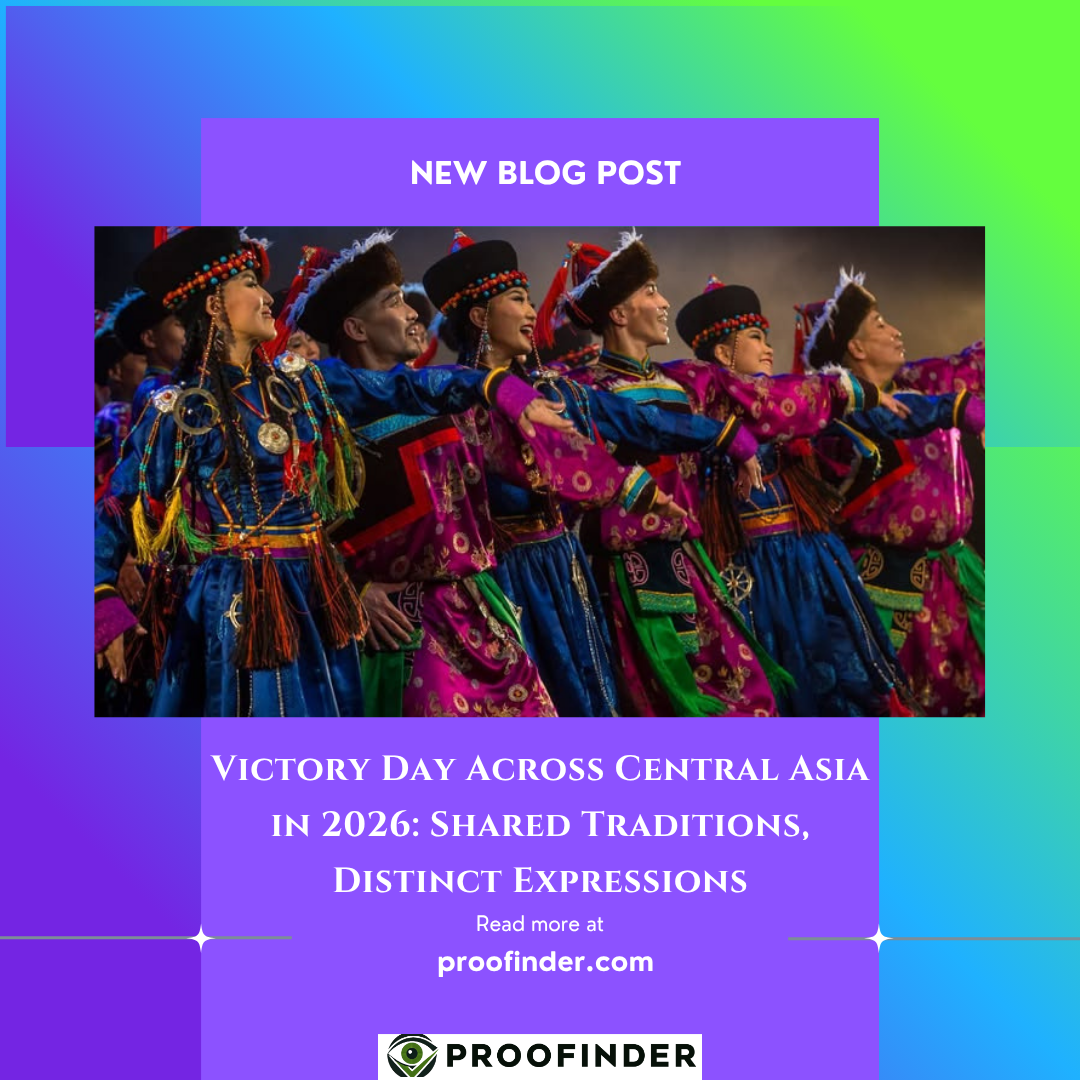
Victory Day Across Central Asia in 2026: Shared Traditions, Distinct Expressions
Each year on May 9, countries across Central Asia mark Victory Day as a widely recognized public holiday. While its historical origins are well known, the way it is observed today is equally shaped by community traditions, public participation, and national style. In 2026, the day once again brought together large segments of society across Kazakhstan, Uzbekistan, Kyrgyzstan, Tajikistan, and Turkmenistan-each with its own tone and level of visibility.
Rather than a single uniform celebration, Victory Day across the region reflects a shared cultural moment expressed through different local forms.
Kazakhstan: Structured and Public-Facing
In Kazakhstan, the day was marked by a visible and well-organized set of public events. Cities hosted ceremonies, concerts, and community gatherings that combined formal elements with broader participation.
Common features included:Public performances and open-air concerts.
Organized marches and remembrance walks.
Community events in parks and central squares.
These patterns can affect how questions are interpreted and how openly participants respond, particularly in structured interviews or surveys.
Uzbekistan: Reflective and Community-Oriented
In Uzbekistan, Victory Day continued to be observed with an emphasis on remembrance and community participation. Events were widely held but often carried a more reflective tone.
Across cities and towns, the day included:Cultural programs and musical performances.
Visits to memorial spaces and public landmarks.
Family-centered participation and small-scale gatherings.
The atmosphere was less centered on large-scale displays and more on quiet, community-based engagement.
Kyrgyzstan: Highly Social and Participatory
Kyrgyzstan stood out for its strong public and social dimension. The day was marked by active participation from different generations, with a visible presence of community-driven events.
Typical elements included:Public marches and group gatherings.
Cultural performances and live events. .
Intergenerational participation in shared spaces.
The overall tone was lively and inclusive, with Victory Day functioning as both a commemorative and social occasion.
Tajikistan: Formal and Ceremonial
In Tajikistan, the observance of Victory Day maintained a more formal and ceremonial character. Public events were present, though generally more structured and less expansive than in some neighboring countries.
The day included:Official ceremonies and organized events.
Cultural programs with a traditional focus.
Public recognition activities in designated locations.
The atmosphere reflected a measured and respectful approach, with emphasis on formal observance.
Turkmenistan: Reserved but Recognized
In Turkmenistan, Victory Day was officially observed, though with comparatively lower public visibility. Events tended to be more contained and structured, with less emphasis on large public gatherings.
Observances typically included:Official recognition and cultural programming.
Organized events in formal settings.
Limited but consistent public acknowledgment.
The tone was more reserved, though still aligned with the broader regional tradition of marking the day.
A Shared Day, Different Atmospheres
Across Central Asia, Victory Day in 2026 highlighted how a single date can be expressed through different cultural rhythms and public styles. While all countries marked the occasion, the atmosphere ranged from highly participatory and social to more formal and reflective.
These variations reflect broader differences in how public events are organized and experienced across the region. Yet at the same time, the continued observance of the day across all five countries points to a shared regional tradition that remains visible in contemporary public life.
“A common history is remembered differently-but shared moments continue to connect the region.”