
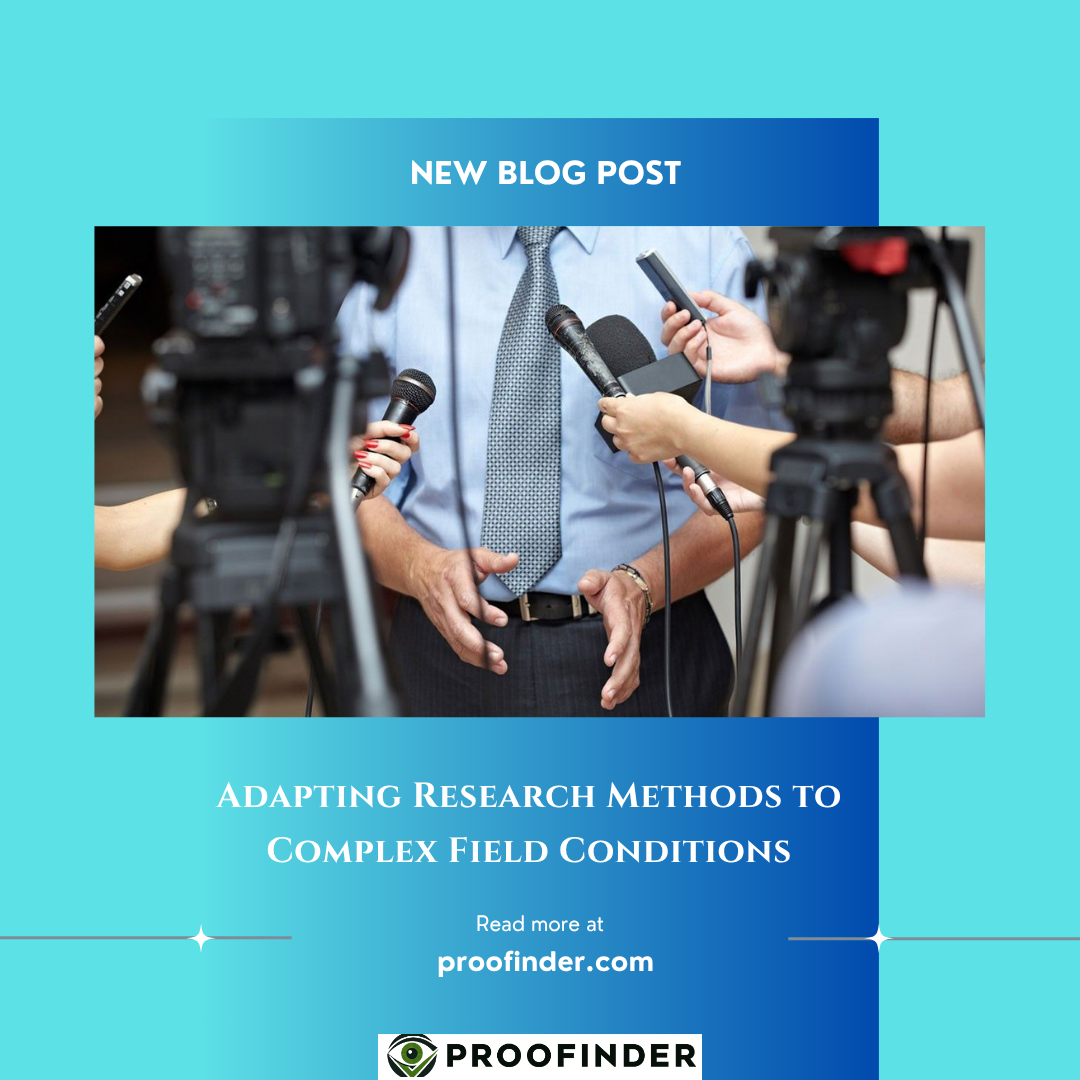
Adapting Research Methods to Complex Field Conditions
Conducting research in controlled environments allows for structured planning, consistent access, and predictable outcomes. However, many organizations operate in contexts where conditions are uncertain, access is uneven, and information is difficult to verify. In such settings, applying standard research methods without adjustment can lead to incomplete or misleading insights.
Adapting research methods to complex field conditions is therefore essential. It requires researchers to balance methodological rigor with practical realities, ensuring that findings remain credible while reflecting the constraints of the environment.
Understanding the Constraints of the Field
Complex field conditions are shaped by a combination of logistical, social, and political factors. These environments often limit how data can be collected and influence how information is shared.
Researchers may encounter challenges such as:Restricted access to certain locations or communities.
Dependence on intermediaries or local networks for information.
Inconsistent or fragmented data availability.
Rapidly changing conditions that affect research timelines
These factors mean that research design cannot remain static. Instead, it must evolve in response to the realities on the ground.
Moving Beyond Fixed Methodologies
In complex environments, relying on a single research method is rarely sufficient. Researchers must be prepared to adapt their approach based on what is feasible and reliable at any given time.
Effective adaptation often involves adjusting data collection methods by shifting between interviews, observation, secondary sources, or indirect indicators depending on access and context. It also requires revising sampling approaches by working with available populations while clearly acknowledging limitations and potential biases. Another key element is using triangulation by cross-checking information from multiple sources to improve accuracy and credibility. Finally, it involves documenting constraints transparently by clearly outlining limitations to ensure findings are interpreted appropriately.
By adopting a flexible approach, researchers can continue to generate meaningful insights even when ideal conditions are not available.
Interpreting Data Within Context
In complex field settings, data cannot be separated from its context. Social norms, local power structures, and communication patterns all influence how information is presented and understood.
Researchers must consider:How respondents frame information based on local dynamics.
What may be omitted, softened, or indirectly communicated.
Differences between official narratives and observed practices.
The influence of local actors on access and information flow.
Without this level of contextual understanding, even accurate data can be misinterpreted, leading to flawed conclusions.
Building Practical Research Strategies
Organizations that operate in complex environments often develop practical strategies to strengthen their research processes. These strategies focus on improving both the reliability of data and the adaptability of research design.
Common approaches include:Combining qualitative and quantitative methods to capture both measurable trends and contextual nuance.
Engaging local expertise to better understand cultural and operational dynamics
Allowing for flexible timelines to accommodate delays and changing conditions.
Continuously reassessing research assumptions as new information emerges.
These practices help ensure that research remains responsive to real-world conditions while maintaining analytical value.
From Constraint to Insight
Complex field conditions should not be seen only as obstacles. When approached effectively, they can provide unique insights that are not visible through standard research methods. Adapting methodologies allows researchers to uncover patterns, behaviors, and dynamics that might otherwise remain hidden.
Organizations that invest in flexible, context-aware research approaches are better positioned to understand complex environments and make informed decisions.
“Strong research is not defined by rigid methods, but by the ability to adapt those methods to the realities of the field.”