
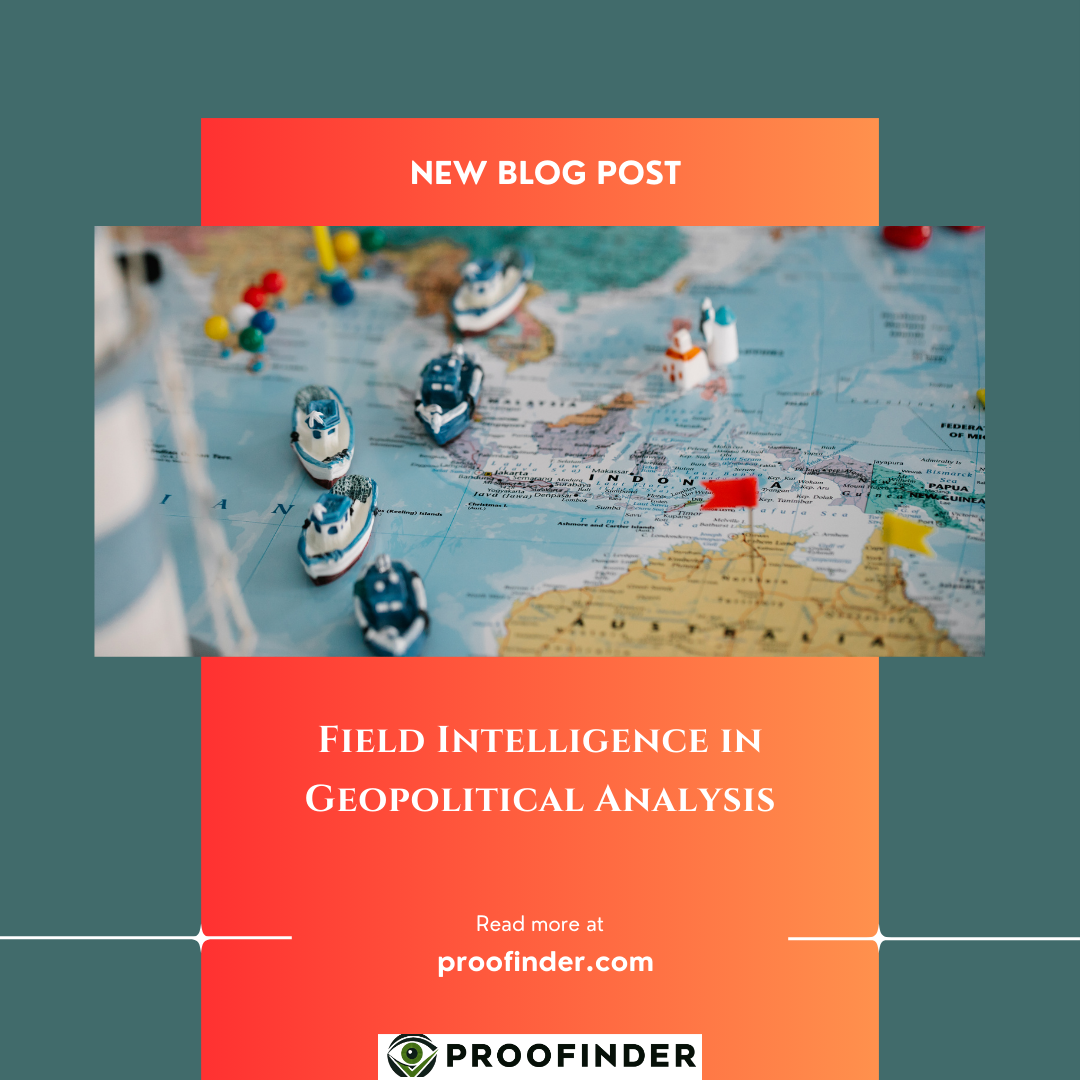
Field Intelligence in Geopolitical Analysis
Global politics is influenced as much by local realities as by high-level negotiations. While policy analysts and journalists often work from publicly available data, these sources can miss the micro-level developments that signal bigger shifts ahead. Field intelligence — gathered through on-the-ground observation — offers a vital complement to desk-based research.
The Role of Ground-Level Observation
Geopolitical shifts often start small: a change in local governance, alterations to trade routes, or subtle shifts in public sentiment. Without field verification, these signs can be overlooked until they manifest in more visible ways.
Field intelligence provides:
Verification: Confirms whether public statements match on-the-ground realities.
Early Warning: Detects developments before they appear in official reports.
Cultural Context: Reveals how communities perceive and respond to political events.
Integrating Field Intelligence into Analysis
Effective geopolitical studies often combine:
Media Monitoring: Tracking coverage and commentary in both local and international outlets.
Stakeholder Interviews: Gathering perspectives from academics, journalists, and civil society.
Site Visits: Observing economic activity, infrastructure changes, and public behavior firsthand.
Implications for Policy and Strategy
When field intelligence is integrated into geopolitical reporting, it allows for:
More accurate risk assessments.
Better-informed diplomatic or economic strategies.
Balanced narratives that avoid reliance on a single perspective.
In a rapidly shifting global environment, field intelligence transforms geopolitical analysis from static reporting into dynamic forecasting. It adds the human, cultural, and operational layers that purely remote research cannot capture.